The results professionals rely on.
Accredited laboratory testing for contractors, consultants, engineers, property managers, and homeowners — asbestos, mold, lead, silica, water, VOC, air, soil & waste, and fire-damage particulate. Same-day, 24 and 48-hour turnaround.
Need a sample collected on-site? Explore Field Science → · Client Portal → · Wholesale accounts →
Accredited & Certified By
 NVLAP Lab Code 600211-0
 AIHA-LAP EMLAP 173498
 AIHA-LAP ELLAP 173498
 NY DOH ELAP 12738
 NJ NELAP 20045
EPA NLLAP Recognized · GSA Contract 9AA27
View all accreditations, lab codes & scopes →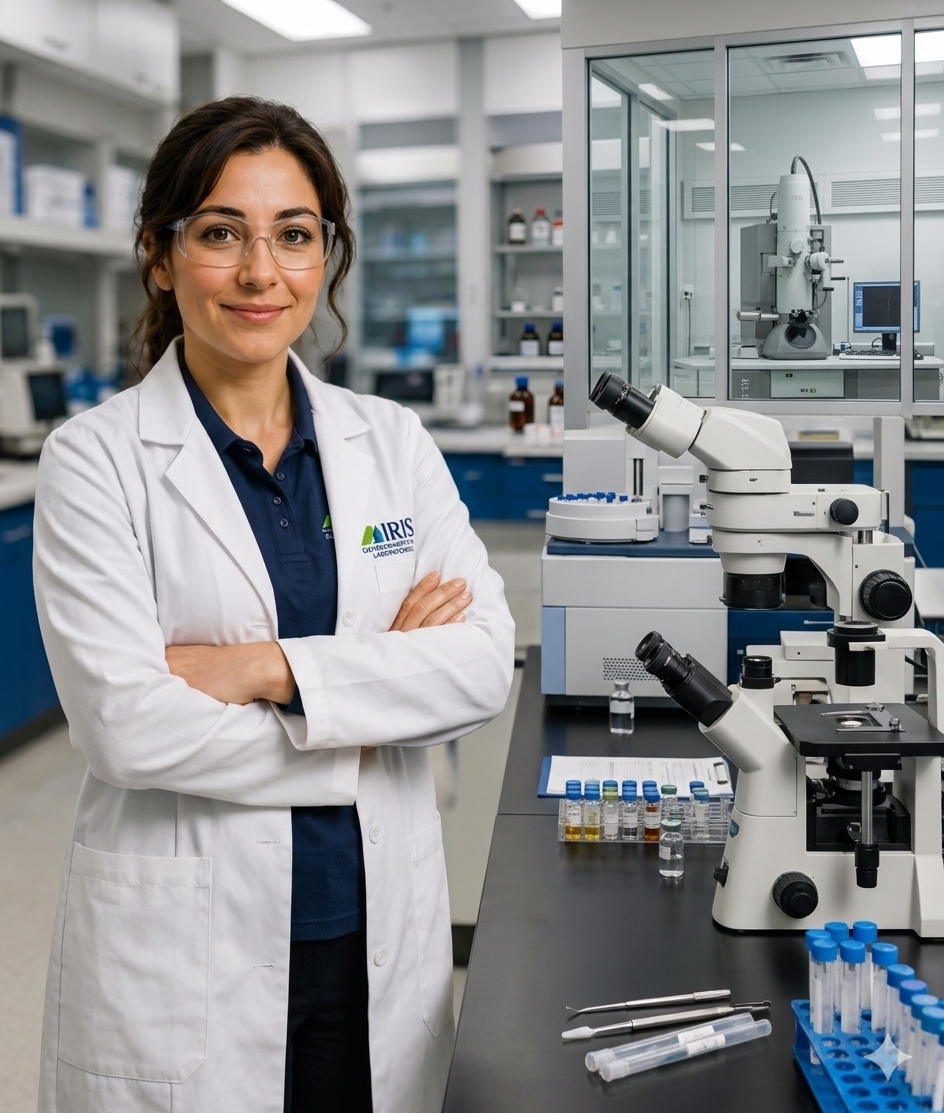
An accredited environmental laboratory you can build a practice around
IRIS Laboratories is a nationally accredited analytical lab offering a full range of analyses: asbestos PCM/PLM/TEM, mold, lead and metals, silica, VOC, fire-damage particulate, TCLP, PFAS, and metals and bacteria in drinking water and wastewater. Environmental consultants, remediation contractors, and property managers rely on us for defensible results with 24–48 hour turnaround.
Every method runs under formal accreditation, and every report is signed by a credentialed analyst. We run our core methods, PLM, TEM, ICP-OES, and microscopy, in our own lab, and partner with accredited specialty labs for analyses such as PFAS and TCLP.
Learn More →The lab work that backs every report
Five accredited testing programs. Select the group that matches your hazard type — each links to methods, matrices, and turnaround times.
NVLAP 600211-0
Asbestos
- PCM air
- PLM bulk
- TEM (AHERA)
- TCLP asbestos waste
EPA NLLAP · HUD
Lead
- Paint chips · Dust wipes · Soil
- Air ambient & workplace (OSHA)
- Lead in water
NJ NELAP · TNI · CDC-ELITE
Water
- Drinking water metals
- Wastewater metals
- PFAS (forever chemicals)
- Lead in water · Legionella · E. coli
AIHA-LAP · AIHA EMLAP · NIOSH
Indoor Air
- Mold
- VOC
- Silica ambient & workplace (OSHA)
- Fire / soot · Lead in air · Asbestos air
NJ NELAP · RCRA Compliant
Soil & Waste
- TCLP hazardous waste
- Lead in soil
Find the testing that fits your work
Different jobs, different tests. Pick the profile that matches you and we'll point you to what you need most.
Contractors & Abatement Firms
Pre-demo surveys, post-abatement clearance, RRP compliance, demolition-waste TCLP, post-remediation mold.
What you need →Industrial & Facility Managers
Cooling-tower Legionella, NJPDES discharge, OSHA silica & VOC air, ambient particulate, fire/soot, TCLP.
What you need →Homeowners & Property Owners
Pre-sale lead tests, tap-water checks, basement mold concerns, fire damage testing, in plain language.
What you need →Not sure what you need?
Tell us your situation and we'll point you to the right test.
Need someone to collect the sample for you?
Our certified field professionals handle asbestos, lead, mold, silica, VOC, soot, TCLP, and water sampling. Same team, same chain-of-custody, same lab. Your client is your client, we run the samples, you own the relationship.
Explore Field Science →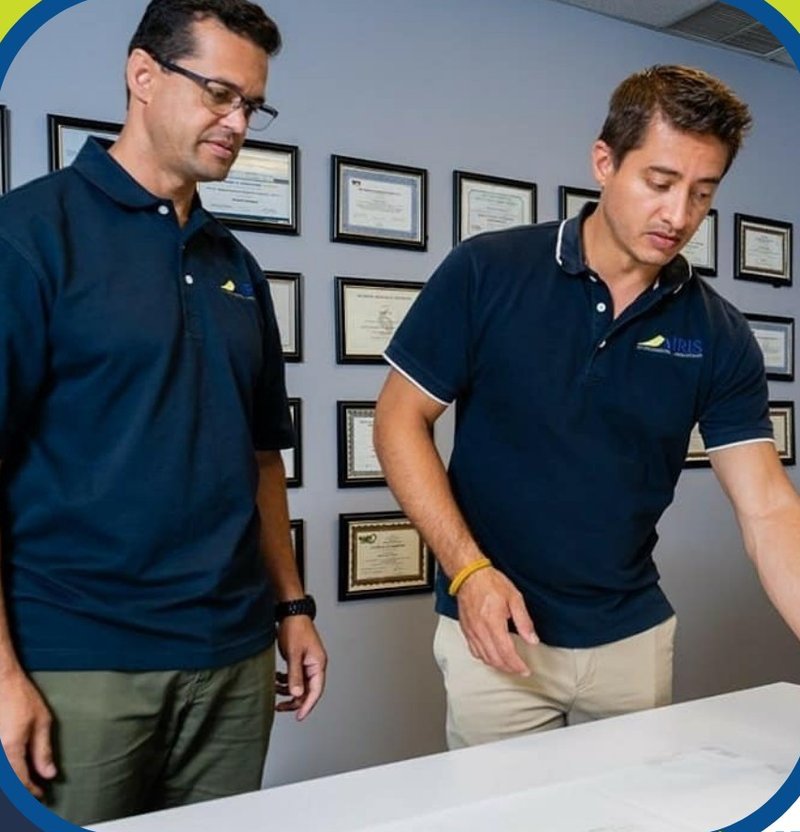
Wholesale Lab Services
IRIS Laboratories partners with remediation contractors, environmental consultants, and property management firms to provide wholesale lab testing at competitive rates.
Get dedicated account management, priority turnaround times, volume pricing, and white-label reporting options. We test, never remediate. No competition, guaranteed.
Open a Wholesale AccountWe Test, Never Remediate.
IRIS is exclusively a testing laboratory. We never compete with our partners for remediation work.
Non-Compete Guarantee
We provide testing and field science services only. All remediation referrals go back to our contractor partners. Your client relationships are protected. We will never solicit your clients for remediation work or recommend competing contractors. This is our written guarantee to every wholesale partner.
Why Contractors Choose IRIS
Comprehensive support designed for environmental professionals.
Volume Pricing
Competitive wholesale rates that improve as your volume grows. No minimums to get started.
Priority Turnaround
Rush processing available for partner accounts. Most results delivered within 24 hours.
White-Label Reports
Co-branded or white-label reporting options available for partner firms.
Dedicated Support
Assigned account manager for every wholesale partner. Direct line and priority email support.
From Sample to Signed Report
A three-step lab workflow built around accreditation and turnaround.
Submit
Drop off, ship, or have our field professionals collect on-site. Chain-of-custody starts the moment we log the sample at intake.
Analyze
Methods like PLM, TEM, ICP-OES, and microscopy all run under formal accreditation. Analysts are credentialed, instruments are calibrated, and QC is documented on every sample.
Report
Reports back in 24–48 hours, ready to file with the relevant jurisdiction. White-label and co-branded options for wholesale partners.
One accredited lab. Nationwide sample intake.
Ship or drop off samples to our Union, NJ laboratory, or have our field professionals collect on-site.
New Jersey: Union
Frequently Asked Questions
Find answers to the most common questions about our services.
Ready to submit a sample?
Tell us what you need analyzed. Standard turnaround is 24–48 hours, with rush options for wholesale partners. We'll reply with a quote and a chain-of-custody form within one business day.