Water
From Foul Faucets to Lab Results: How to Diagnose Water Odors in Your Home
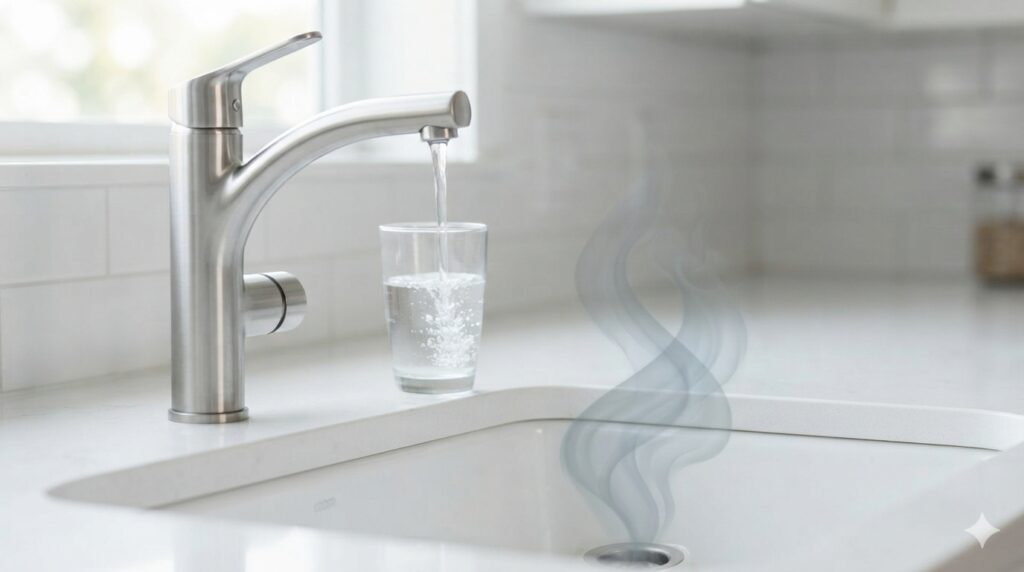
Unexplained water odors near your household fixtures can be a major red flag, prompting many homeowners and property managers to seek certified laboratory testing for peace of mind. When a foul stench like rotten eggs, sewage, or chemical vapors concentrates near basement floor drains, kitchen sinks, or bathroom toilets, it is critical to determine whether the issue is a simple plumbing failure or a serious water contamination problem.
Before submitting samples to a lab, understanding how to isolate the source of the odor can save you time, optimize your testing parameters, and ensure you get the most accurate data possible.
Step 1: The “Glass Test” (Isolating the Variable)
In any scientific diagnostic process, you must isolate your variables. Before assuming your water supply is contaminated, perform a quick sensory screening to differentiate between a plumbing drain issue and a water quality issue:
- Let your faucet run for 30 seconds.
- Fill a clean, sterile glass with water, turn off the tap, and step completely away from the room where the fixture is located.
- Smell the water in the glass in a neutral environment.
- If the glass smells clean: The source of the odor is organic buildup or structural failure within the drainage system, not the water itself.
- If the glass smells foul: The odor is actively carried by the water supply, meaning it is time to look into laboratory analysis.
When the Odor is Environmental (Plumbing & Drains)
If your glass test proves the water itself is clean, the odor is likely caused by localized gases escaping from your plumbing. These issues do not require lab testing and can usually be resolved with structural maintenance:
1. Basement Stench (Dried-Out P-Traps)
Basement floor drains and utility sinks are prone to sudden sewage smells. Drains rely on a U-shaped pipe called a P-trap, which must hold a constant pool of water to act as a physical barrier against sewer gas. Because basement drains are rarely used, this water barrier evaporates over time, leaving an open line for sewer gas to flood the room.
2. Kitchen & Bathroom Buildup (Biofilm)
Bacteria feast on the decomposing organic waste (food particles, hair, shaving cream, and soap scum) that clings to drain walls. As they multiply, they release hydrogen sulfide gas. When you turn on the faucet, the rushing water displaces this gas, pushing the smell up into your face.
When the Odor is Environmental (Plumbing & Drains)
If your glass test proves the water itself is clean, the odor is likely caused by localized gases escaping from your plumbing. These issues do not require lab testing and can usually be resolved with structural maintenance:
1. Basement Stench (Dried-Out P-Traps)
Basement floor drains and utility sinks are prone to sudden sewage smells. Drains rely on a U-shaped pipe called a P-trap, which must hold a constant pool of water to act as a physical barrier against sewer gas. Because basement drains are rarely used, this water barrier evaporates over time, leaving an open line for sewer gas to flood the room.
2. Kitchen & Bathroom Buildup (Biofilm)
Bacteria feast on the decomposing organic waste (food particles, hair, shaving cream, and soap scum) that clings to drain walls. As they multiply, they release hydrogen sulfide gas. When you turn on the faucet, the rushing water displaces this gas, pushing the smell up into your face.
3. Toilet Area Odors (Failed Wax Rings)
If a sewage smell is localized entirely around a toilet, the thick wax ring sealing the toilet base to the sewer line has likely degraded or cracked. This allows gases to escape every time the toilet is flushed or shifted.
When the Odor Demands Certified Laboratory Testing
If your glass test confirms that the odor is coming directly from the water supply, DIY fixes will not suffice. You need a comprehensive water quality analysis from an accredited laboratory to pinpoint the exact contaminant profile.
Depending on the specific scent profile, your lab panel should target different parameters:
Rotten Egg or Sulfur Odor
- The Cause: This is typically caused by Hydrogen Sulfide (H₂S) gas or Sulfur-Reducing Bacteria (SRB).
- What to Test For: Ask the laboratory for a Sulfate and Hydrogen Sulfide panel, alongside a Total Coliform/E. coli test to rule out surface water intrusion. If the smell only occurs with hot water, the magnesium anode rod in your water heater may be chemically reacting with naturally occurring sulfates, which can be verified by testing both cold and hot tap points.
Musty, Moldy, or Earthy Odor
-
- The Cause: Often driven by harmless but unpalatable iron-reducing bacteria, manganese, or organic matter (humic acids) leaching into groundwater.
- What to Test For: Request an Iron, Manganese, and Total Dissolved Solids (TDS) analysis.
Chemical, Gasoline, or Sharp Medicinal Odor
- The Cause: This is the most critical scenario, signaling potential industrial runoff, localized fuel tank leaks, or heavy chlorination interaction with organic matter.
- What to Test For: Request an immediate Volatile Organic Compounds (VOCs) scan and a Total Trihalomethanes (THMs) test if you are on a municipal system.
Streamlining Your Lab Submission
When dealing with water odors, accuracy depends on proper sample collection. Always use the sterile containers provided by your chosen laboratory and follow their specific protocols regarding “first-draw” samples (water that has sat in the pipes overnight) versus “flushed” samples (water collected after running the tap for several minutes). Documenting these odor characteristics will help the lab technicians recommend the most effective testing panel for your property.